Loyalty Rewards Drive Bettor Shifts Across Expanding Market Options
Lars Bauer · Jun 21, 2026

Loyalty Rewards Drive Bettor Shifts Across Expanding Market Options
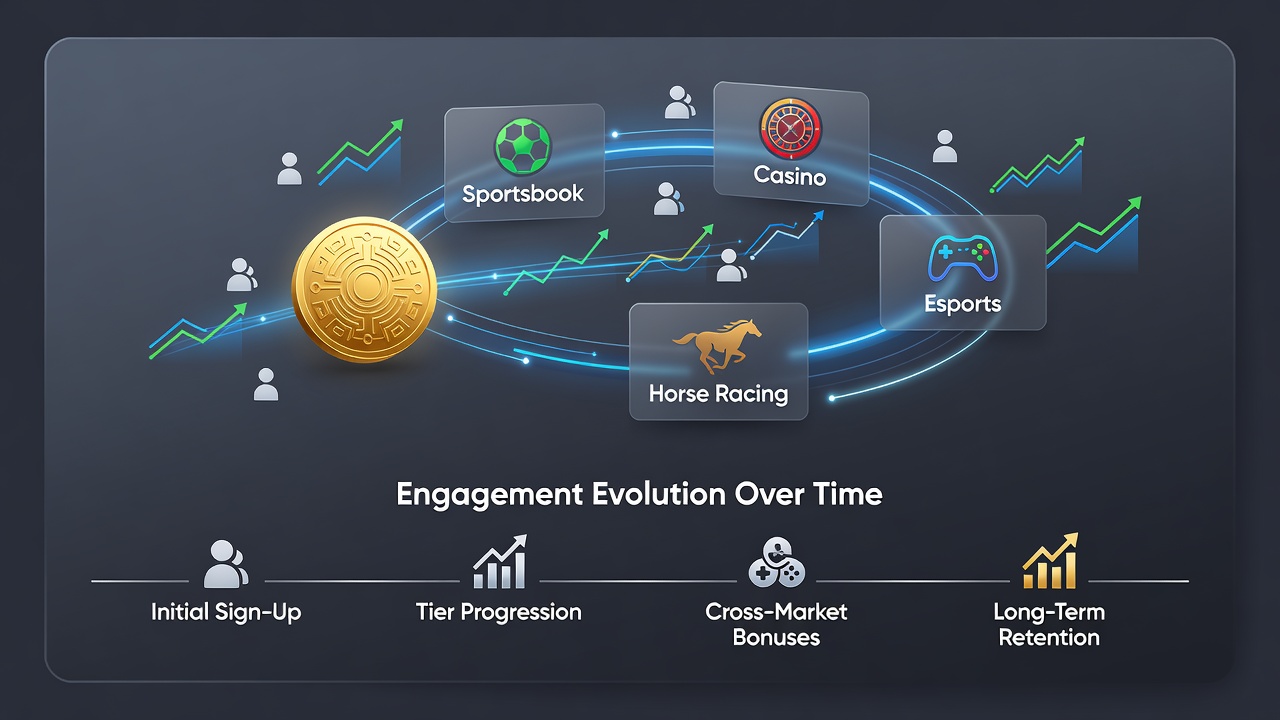
Operators have rolled out tiered loyalty structures that accumulate points across sportsbooks, casino floors, and live event wagers, and these systems have altered the pace at which participants sample new categories. Data collected through 2026 shows steady migration patterns where account holders who joined for one product category began placing wagers in two or three additional verticals within twelve months of enrollment.
Point Accumulation Mechanics Across Product Lines
Programs assign multipliers when users move from horse racing to football accumulators or from slots to poker tournaments, which creates measurable cross-category volume. Figures released in June 2026 by industry monitoring groups indicate that 62 percent of active loyalty members maintained activity in at least three distinct markets, up from 41 percent recorded in comparable 2023 cohorts. The same datasets reveal that retention intervals lengthen when point balances transfer automatically between verticals without requiring separate opt-ins.
Segmented Reward Tiers and Market Penetration
Gold and platinum levels unlock accelerated cashback on live betting and reduced withdrawal thresholds for casino redemptions, and these benefits correlate with increased session counts. Observers tracking account-level logs note that members reaching higher tiers place an average of 3.8 times more wagers per month than base-level participants, with the largest growth appearing in previously untouched categories such as virtual sports and e-sports. European Gaming and Betting Association reports confirm similar patterns across multiple operator portfolios, where tier advancement coincides with broader market exposure rather than concentration in a single product.
Operators adjust earning rates seasonally to steer traffic toward slower-performing verticals, and June 2026 tracking showed targeted double-point campaigns on basketball futures lifting participation in that segment by 27 percent among loyalty members who previously focused on domestic leagues only.
Behavioral Data Patterns Through Mid-2026
Longitudinal studies compiled by research teams at institutions including the University of Sydney's gambling research unit document that loyalty members exhibit lower churn when point ledgers span multiple product types. Account histories from 2024 through June 2026 demonstrate that participants who earned points from both fixed-odds and in-play markets maintained activity rates 19 percentage points higher than single-market users. The same analyses highlight that reward redemptions for non-cash perks, such as event tickets or merchandise, further diversify engagement by prompting visits to previously unexplored betting sections.
Cross-Market Incentives and Session Distribution
Weekly leaderboards that combine volume from casino, sports, and poker create visible competition across categories, and operators report that leaderboard participants distribute wagers more evenly than non-participants. June 2026 operational summaries indicate that 48 percent of leaderboard qualifiers placed wagers in four or more verticals during the tracked period, whereas the corresponding figure for non-leaderboard members stood at 29 percent. These distributions appear driven by the visibility of cumulative standings rather than by isolated product promotions.
Regulatory Context and Reporting Requirements
Authorities in several jurisdictions require operators to publish aggregated loyalty metric reports that separate single-market versus multi-market activity, and these filings supply consistent benchmarks. Canadian provincial regulators, for instance, mandate quarterly disclosures that track point redemption across verticals, while Australian state commissions collect parallel datasets on reward-driven market expansion. Such reporting frameworks enable direct comparison of engagement breadth before and after loyalty program enhancements.
Future Tracking Through 2026 and Beyond
Platform updates scheduled for late 2026 include unified wallets that automatically allocate points across all active markets, and preliminary operator tests show further acceleration of cross-category movement. Researchers continue to monitor whether these unified systems sustain the multi-market patterns observed through June 2026 or introduce new concentration effects once friction between verticals drops even lower. Ongoing data collection will clarify how evolving reward structures continue to shape the distribution of betting activity across expanding options.
Conclusion
Records from multiple regulatory bodies and academic sources confirm that loyalty frameworks have expanded the range of markets in which individual accounts remain active. Point systems that span sports, casino, and live products have produced measurable shifts in session distribution, tier advancement, and retention intervals through June 2026. Continued monitoring will determine how further technical integration influences these established patterns.